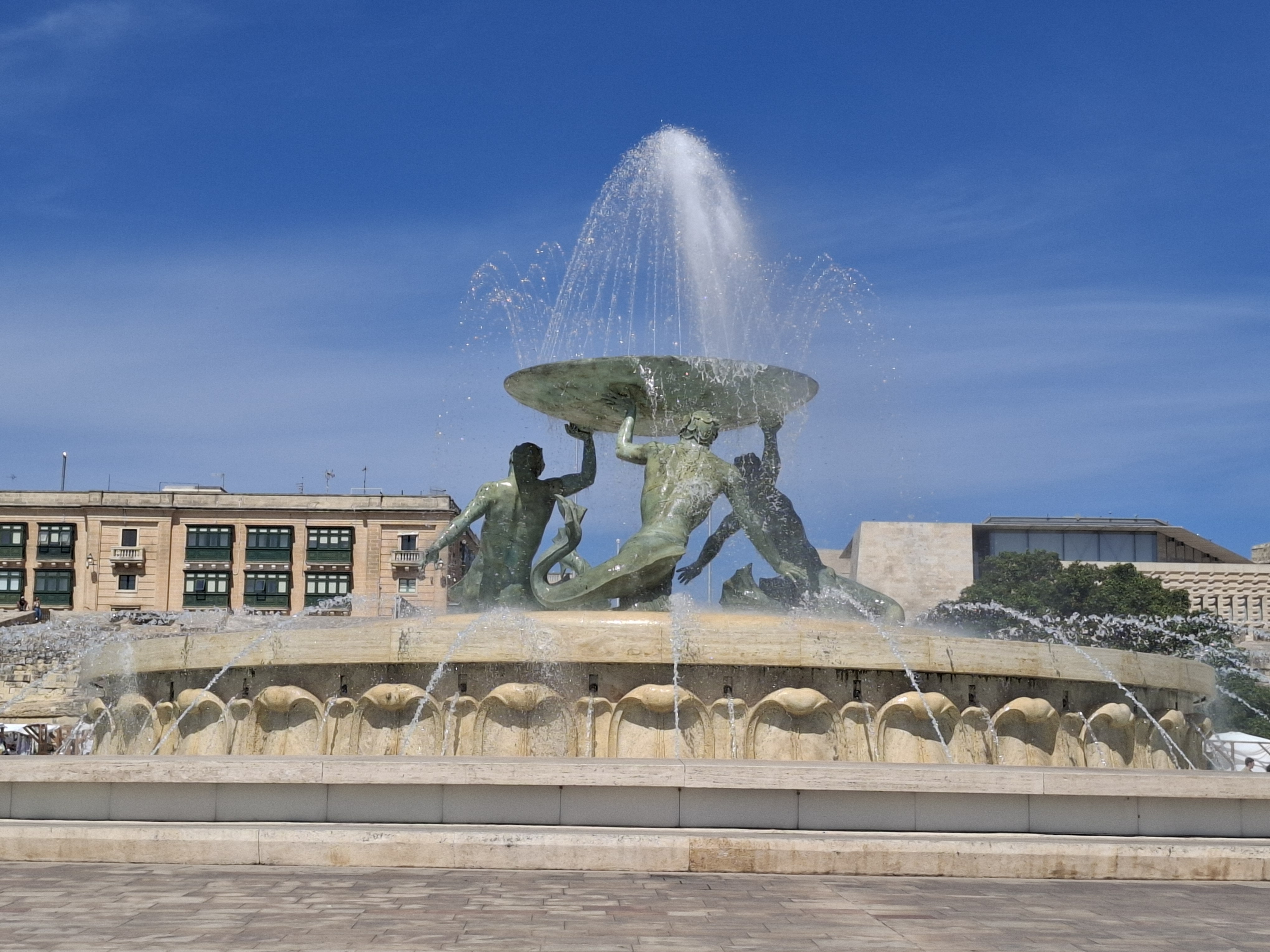
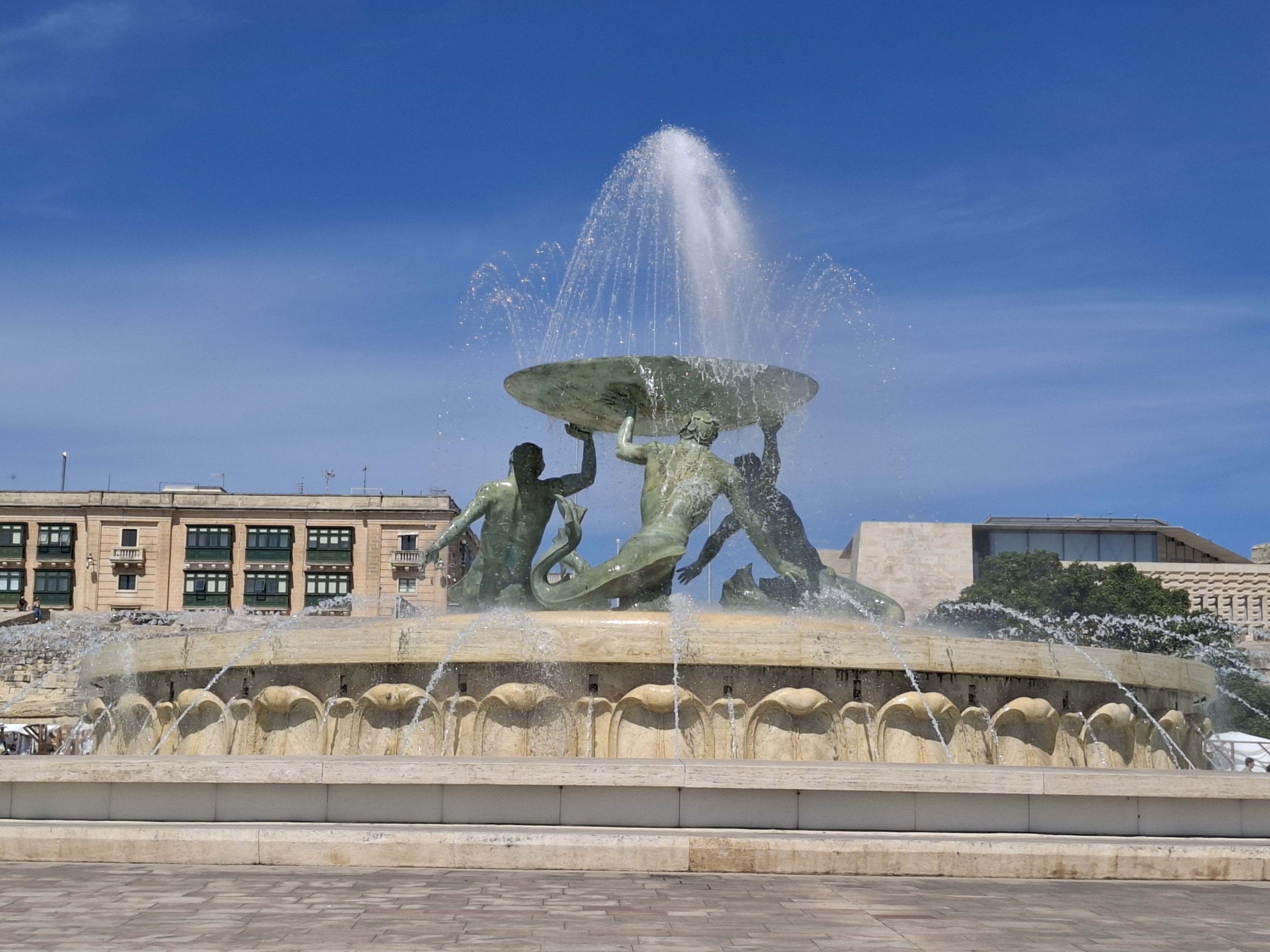
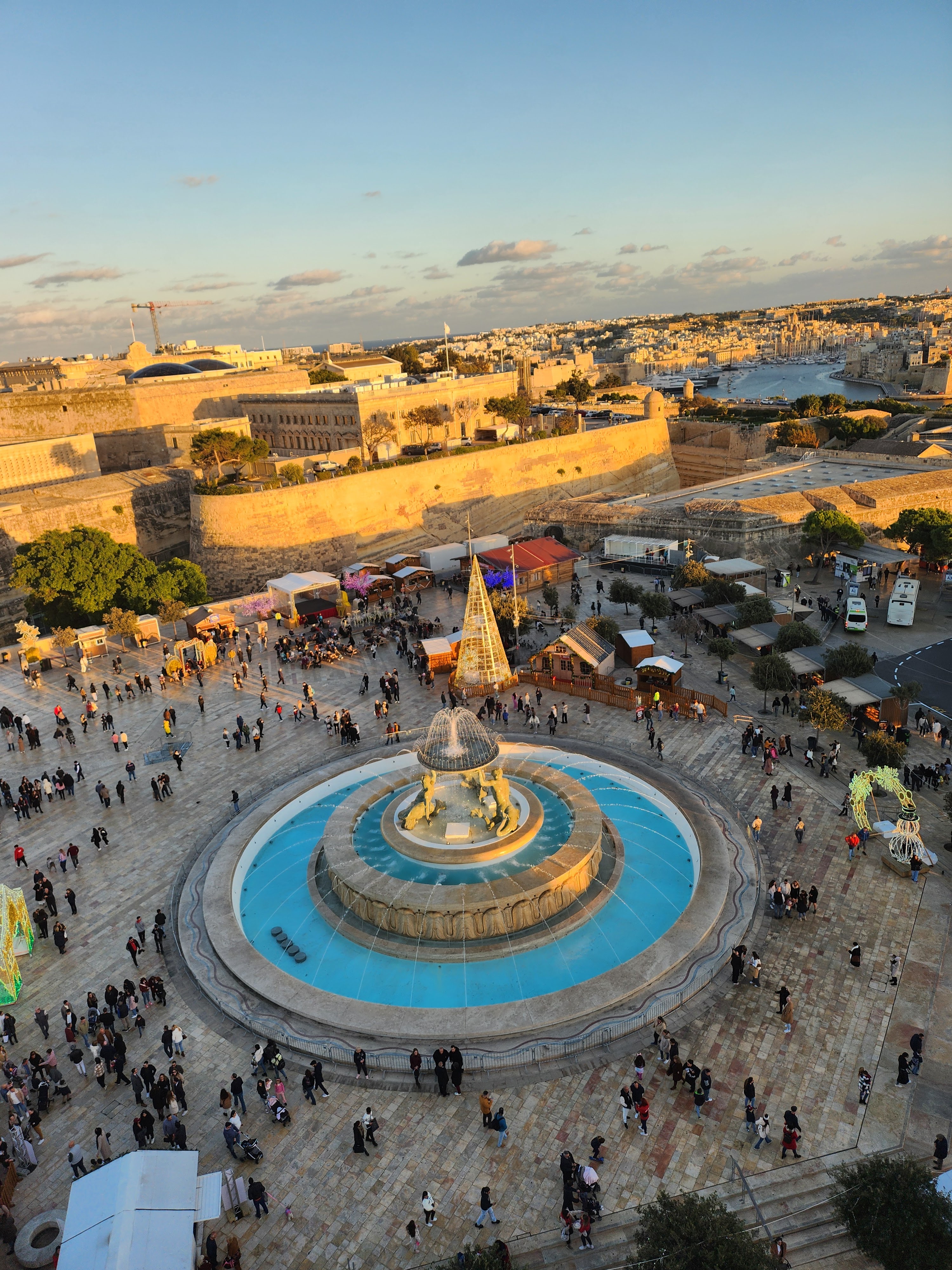
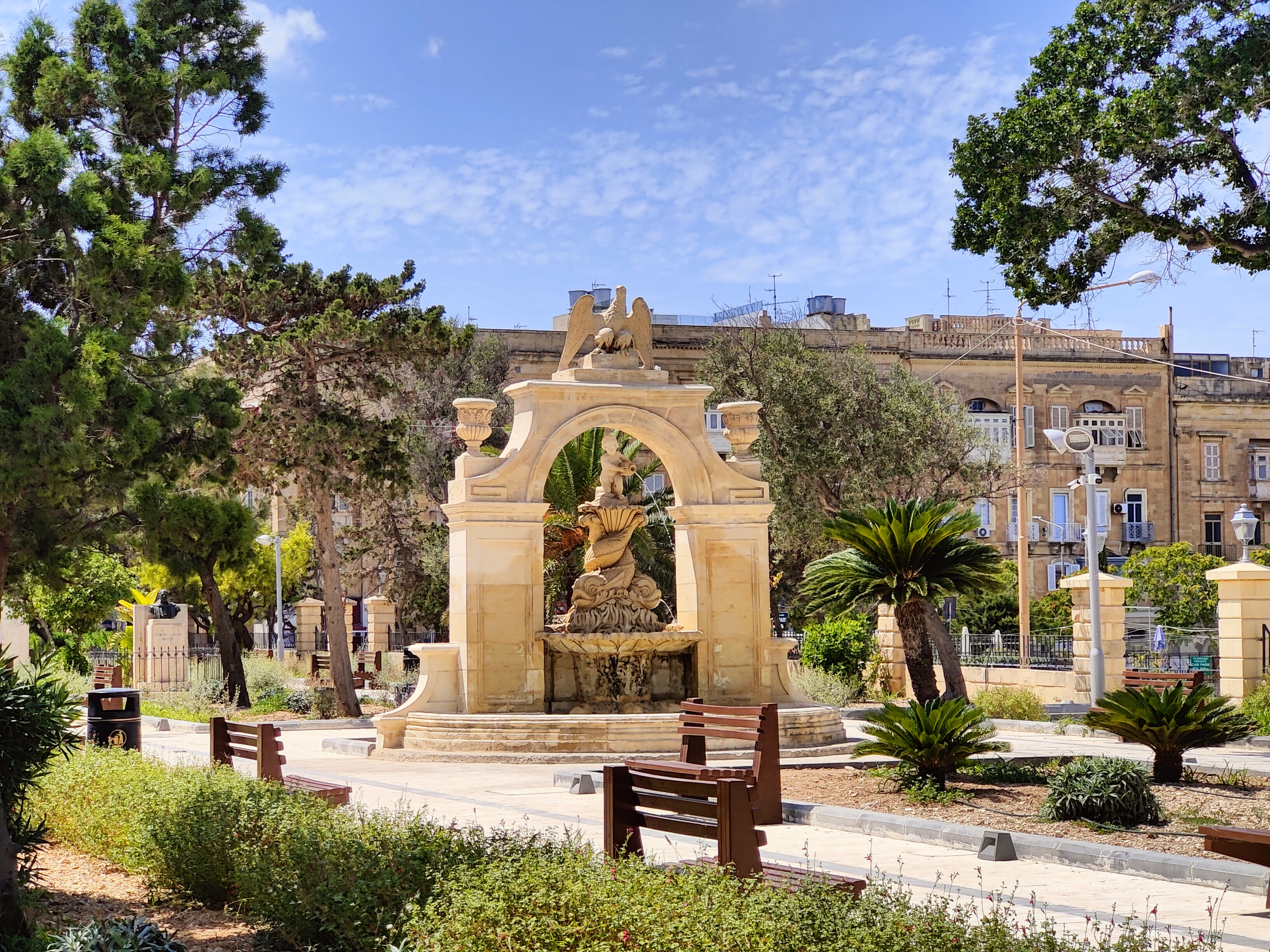
Tritons’ Fountain is one of Malta's most famous landmarks, located in the square outside the City Gate of Valletta, in Floriana. This magnificent bronze fountain, built in 1959 and designed by sculptor Vincent Apap, features three mythological Tritons holding up a massive basin, symbolizing Malta's deep connection with the sea.
Visit Tips
The fountain square is spacious and flat, perfect for a leisurely walk and taking photos.
The fountain is beautifully illuminated at night, making it an excellent spot for night views and romantic strolls.
The square is highly accessible and serves as the main gateway to the historic city of Valletta.
Highlights
Magnificent bronze Triton statues
Important Maltese landmark
Charming night illumination
Spacious public square
About Tritons’ Fountain
Tritons’ Fountain is a significant landmark and public monument in Malta. The structure is routinely maintained and managed by relevant municipal departments and heritage authorities to ensure its pristine condition as a national symbol.
About Tritons’ Fountain
Welcome to Tritons’ Fountain, widely recognized as the central Tritons Fountain. Located in the heart of Floriana, Malta, this landmark is the main gateway for travelers entering the historic capital of Valletta.
Location & How to Visit Tritons Fountain in Floriana
Tritons’ Fountain stands in an open public square just outside the City Gate of Valletta, in Floriana (Il-Furjana), Malta. The square is spacious, flat, and free to visit around the clock, making it an easy first stop on any trip to the capital.
Landmarks & Attractions Around Tritons Fountain
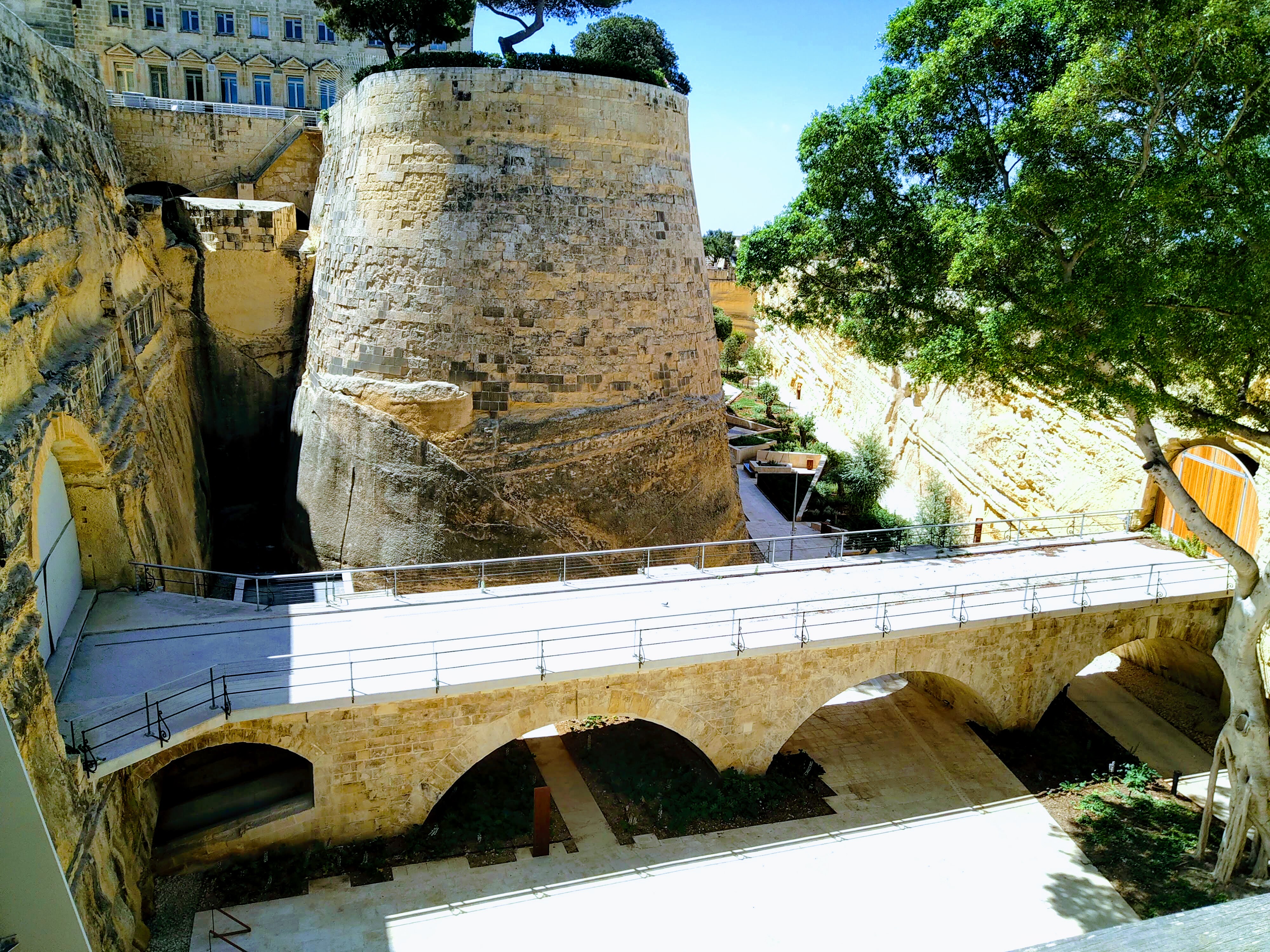
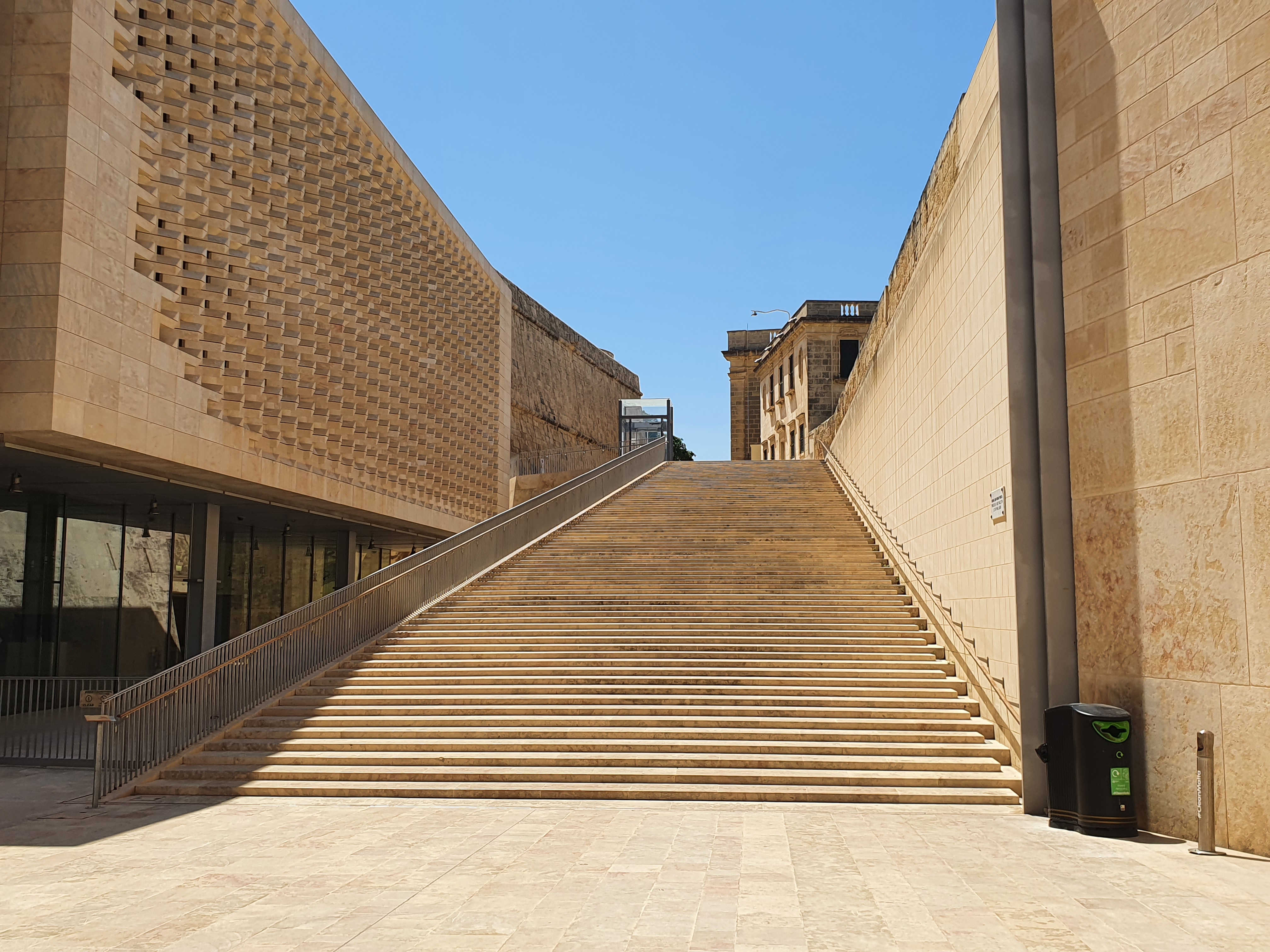
When visiting Tritons’ Fountain, visitors can easily explore surrounding historical landmarks and points of interest, including the Valletta City Gate and St. John’s Co-Cathedral.
History & Significance of Tritons’ Fountain
Designed by Maltese sculptor Vincent Apap and completed in 1959, Tritons’ Fountain quickly became a symbol of Malta’s independence and national identity, and today anchors the entrance to Valletta’s UNESCO-listed old town.
Spring: Pleasant weather, perfect for a stroll in the square
Summer: Enjoy the cool breeze and beautiful night illumination
Best Time to Visit
Autumn: Mild weather, ideal for taking memorable photos
Winter: Experience the peaceful urban atmosphere
The fountain is located in an open public square and can be visited free of charge at any time.
Current Weather & 7-Day Forecast
Live conditions at Tritons' Fountain, Floriana — refreshed automatically so you can plan your visit.
22°C
Mainly clear
22°C
Feels like
62%
Humidity
14 km/h
Wind
0%
Precip
🌤️
No rain expected — a light layer is enough.
Bring a light jacket or sweater for the breeze.
Ideal for outdoor photos and a relaxed stroll through the square.
7-Day Forecast
Sat
Rain showers
26° 21°
Rain 2%
UV 6 · High
Sun
Partly cloudy
25° 21°
Rain 11%
UV 6 · High
Mon
Overcast
26° 22°
Rain 39%
UV 5 · Moderate
Tue
Overcast
25° 21°
Rain 43%
UV 6 · High
Wed
Partly cloudy
24° 20°
Rain 4%
UV 5 · Moderate
Thu
Partly cloudy
25° 19°
Rain 4%
UV 5 · Moderate
Fri
Overcast
25° 20°
Rain 8%
UV 5 · Moderate
Conditions refresh automatically every few minutes.
Admission Information
Visit Fee
As a public landmark, Tritons’ Fountain is completely free and open to all visitors.
Parking
Paid public parking is available outside the walls of Valletta.
Guided Tours
No official guided tours are provided, but many Valletta walking tours start here.
How to Get Here
From Valletta City Center
Just a 1-minute walk outside the Valletta City Gate to reach the fountain square.
From Airport
Direct airport buses are available to the Valletta bus terminus.
From Bus Terminus
Valletta's main bus terminus is adjacent to the fountain, where almost all buses to the capital stop.
Public Transport
Bus routes from all over Malta have services to the Valletta terminus.
Walking
The square is wide and flat, making it very suitable for walking to the City Gate.
Driving
It is recommended to park at the MCP Car Park and walk.
Getting to Tritons' Fountain — Step by Step
The fountain sits right at the Valletta bus terminus, just outside the City Gate.
From Malta International Airport (MLA)
Take the direct airport bus (route X4) to the Valletta terminus — about 40 minutes.
Taxis and ride-hailing apps cover the same trip in roughly 20–25 minutes.
From the terminus, the fountain is a 1-minute walk through the main square.
By Public Bus
Almost every route on Malta terminates at the Valletta bus terminus.
Buy a tallinja card or use contactless payment before boarding.
The fountain is the first thing you see as you step into the square.
By Taxi / Ride-Hailing
Licensed white taxis and app-based services can drop you at the City Gate.
Ask the driver for 'Valletta City Gate' or 'Tritons Fountain'.
There is a designated set-down point at the edge of the square.
By Car & Parking
Driving into Valletta is restricted; park at a public car park outside the walls (MCP / Mateo Falcón).
From the car park it is a short walk to the square.
Avoid on-street parking in Floriana during peak hours.
About Tritons’ Fountain
1
Historical Background
Tritons’ Fountain was constructed in 1959, designed by renowned Maltese sculptor Vincent Apap and draughtsman Victor Anastasi. It was built to decorate the newly constructed bus terminus and quickly became a symbol of Malta's independence and national identity.
2
Design & Architecture
The main structure of the fountain consists of three bronze Triton figures jointly holding up a massive basin. Water overflows from the basin, creating beautiful cascades. The base is constructed from limestone, echoing the historical architectural style of the surroundings.
3
Cultural Significance
As a landmark outside Valletta's City Gate, Tritons’ Fountain is not only a popular photo spot for tourists but also a central square for local residents to gather, celebrate festivals, and host major public events.
4
Restoration & Preservation
The fountain underwent a comprehensive restoration between 2017 and 2018, removing years of grime and damage to restore the bronze statues to their original glory. The square was also redesigned to become a fully pedestrianized public space.
Stories, Symbolism & Heritage
Beyond the bronze and water, the fountain carries decades of Maltese memory.
The Tritons of Myth
In Greek myth, Tritons were messenger-gods of the sea with the body of a fish and the torso of a man. Sculptor Vincent Apap reimagined three of them heaving up a great shell-shaped basin — a nod to Malta's enduring bond with the Mediterranean.
A Symbol of Independence
Unveiled in 1959, the fountain rose as Malta moved toward self-government and, later, full independence in 1964. For many Maltese it became an emblem of national identity.
Guardian of the City Gate
For generations the fountain has been the threshold between the modern city and the fortified old town of Valletta, a UNESCO World Heritage Site since 1980.
The 2017–2018 Restoration
A full restoration stripped decades of grime, repaired the bronze, and returned the square to pedestrians — a transformation locals still talk about.
Visitor Responsibility & Heritage Care
A few simple habits keep this shared public space enjoyable for everyone.
Respect the Monument
The Tritons and basin are protected heritage. Please do not climb, sit on, or enter the water — it is decorative, not for swimming or drinking.
Zero Litter
Use the public bins around the square. During festivals the area gets busy, so take your rubbish with you if bins are full.
Urban Wildlife
Pigeons and gulls gather here. Enjoy them from a distance and avoid feeding them, which harms their health and the square.
Water & Sun Safety
Malta's sun is strong in summer. Carry water, use sunscreen, and take shade breaks — the square has limited natural shade.
Events & Crowds
The square hosts national celebrations. Check local listings and expect larger crowds on public holidays.
Seasonal Travel Strategy
Malta has a Mediterranean climate. The table summarises typical conditions based on 1991–2020 climate normals — useful for planning what to wear and when to go.
Season
Typical Weather
What to Wear
Recommended
Spring (Mar–May)
Mild and sunny, 15–22°C, occasional showers
Light layers, a light jacket
Excellent for walking tours and photography before the summer crowds.
Summer (Jun–Sep)
Hot and dry, 28–34°C, intense sun
Breathable clothing, hat, sunscreen
Visit early morning or after sunset; carry water and seek shade.
Autumn (Oct–Nov)
Warm and settled, 20–26°C, some storms
Light layers, a foldable rain layer
Calm seas and soft light make this a favourite season.
Winter (Dec–Feb)
Mild and wet, 10–16°C, breezy
Warm jacket, waterproof layer
Quiet squares and green countryside; the fountain is lit and atmospheric.
Figures are long-term averages, not a forecast. Always check the live weather above before you set out.
Recommended Route
Explore Tritons’ Fountain and the surrounding historical area.
1
Arrive at the Valletta bus terminus; Tritons’ Fountain will be the first sight to greet you
2
Walk around the fountain to admire the details of the bronze Triton statues
3
Take a photo with the magnificent Valletta City Gate in the background
4
Cross the bridge through the City Gate and officially enter the historic old town of Valletta
5
Upon returning at night, enjoy the fountain's captivating illumination
Recommended Itineraries
Pick a route that matches your group and pace.
By Visitor Type
Families with Kids
Let children watch the water play, then cross into Valletta for the gardens and a relaxed lunch. Keep the route flat and short.
Fountain square (open space, safe for kids)
Upper Barrakka Gardens lift
Valletta waterfront for ice cream
Photography & Nature
Shoot the Tritons at blue hour and golden hour, then capture the City Gate contrast and harbour views.
Blue-hour shot from the square
Golden-hour at the City Gate
Sunrise over the Grand Harbour
Low-Mobility / Accessible
The square is step-free and the Valletta City Gate area is wheelchair friendly with lifts to the gardens.
Step-free circuit of the square
Barrier-free path through the City Gate
Lift to Upper Barrakka Gardens
Half-Day & Full-Day Plans
Half-Day Plan
A focused visit for travellers with limited time.
Arrive at the fountain square
10-minute walk through the City Gate into Valletta
Coffee and a short stroll on Republic Street
Return for a night photo of the illuminated fountain
Full-Day Plan
Explore the fountain and the highlights of Valletta in one day.
Morning at the fountain and City Gate
St. John's Co-Cathedral
Lunch in Valletta
Upper Barrakka Gardens & Grand Harbour view
Evening illumination of the fountain
Top Photo Spots
Front of Fountain
Fountain Front Panorama
Stand directly in front of the square to capture the spectacular view of the three Tritons holding the basin.
Side of Fountain
Valletta City Gate Background
Use the modern Valletta City Gate as a backdrop to capture the blend of the ancient fountain and modern architecture.
Any Angle in the Square
Night Illumination
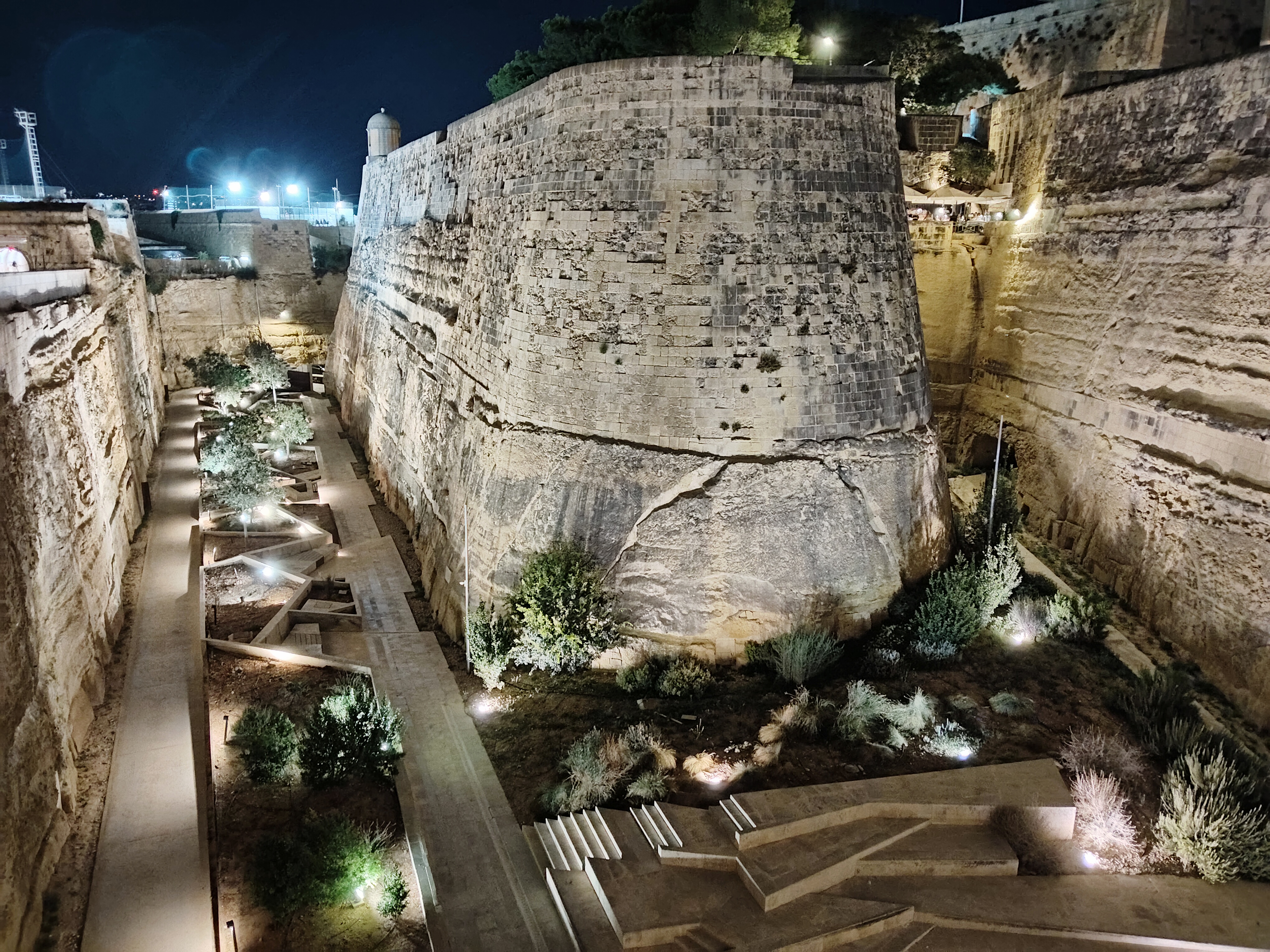
When the lights turn on at night, the fountain glows golden, making it an excellent time for night photography.
Edge of Fountain
Water Cascades Close-up
Get close to capture the dynamic beauty of water cascading from the massive basin.
Tritons’ Fountain is located in Floriana (Il-Furjana), Malta, immediately outside the City Gate of Valletta.
Is Tritons Fountain free to visit?
Yes, Tritons’ Fountain is a public monument and is free to visit year-round, open 24 hours a day.
What are the opening hours of Tritons’ Fountain?
The fountain stands in an open public square and is accessible 24 hours a day, every day of the year.
How do I get to Tritons’ Fountain?
It is about a 1-minute walk from the Valletta City Gate and sits right next to the Valletta bus terminus; direct airport buses also stop nearby.
Who designed Tritons’ Fountain?
It was designed by the Maltese sculptor Vincent Apap together with draughtsman Victor Anastasi, and was completed in 1959.
What is there to see near Tritons’ Fountain?
Right beside it is the Valletta City Gate, and within a short walk are St. John’s Co-Cathedral, the Upper Barrakka Gardens, and Republic Square in Valletta.
Are there beaches near Tritons’ Fountain and Valletta?
Valletta is a fortified city with a rocky coastline rather than sandy beaches. For swimming, the closest spots are the Sliema waterfront and Exiles Bay (a short ferry or walk across the harbour), with larger sandy beaches such as St. Julian’s, Mellieħa and Golden Bay a bus ride away.
When is the best time to visit and photograph Tritons’ Fountain?
The square faces open sky, so golden hour and blue hour give the warmest light on the bronze Tritons, while after sunset the fountain is illuminated and reflective — ideal for night photography. Mornings are the quietest.
Sources & Official References
Authoritative government and heritage references for Tritons’ Fountain and Malta.